

Closing the Executive Gap in Cyber Incident Response
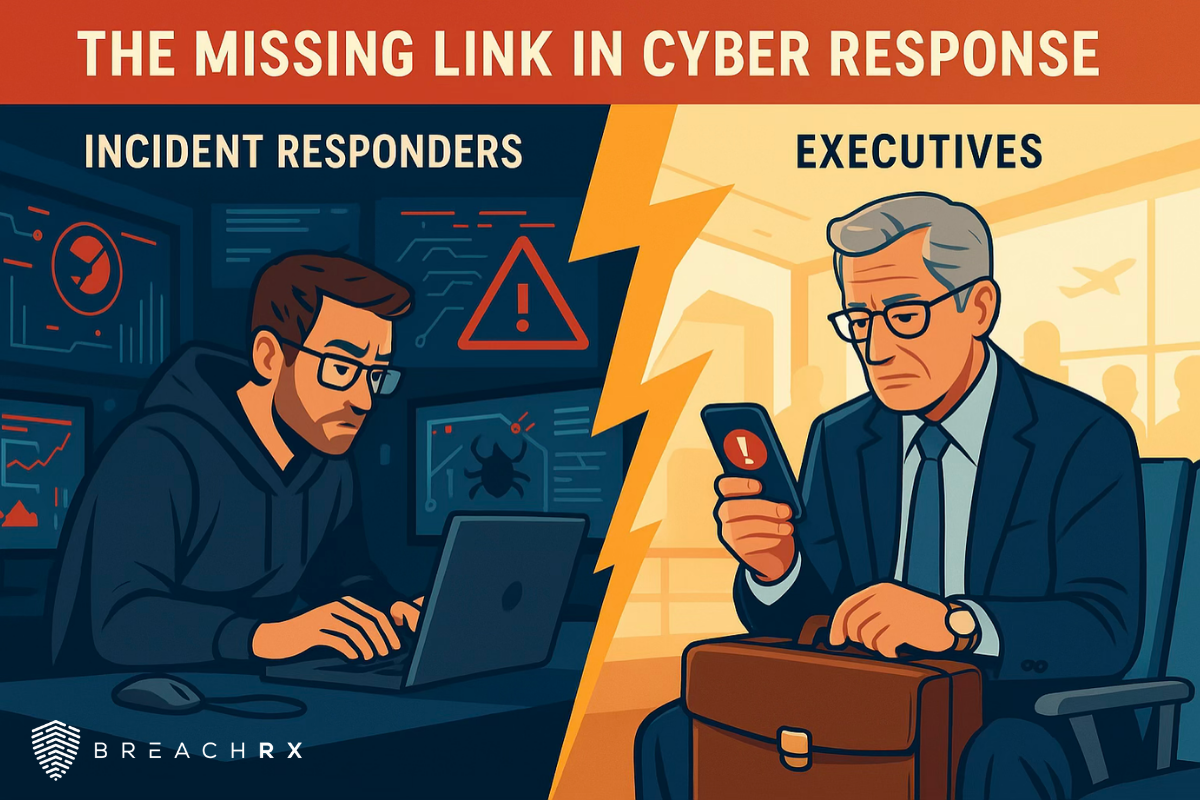
Picture this: it’s 7:45 a.m. on a Tuesday. Your security operations center flags an anomalous spike in data transfers. Within minutes, a possible breach escalates to an active incident. The incident response (IR) team jumps into action, isolating systems, capturing logs, and calling forensics.
Meanwhile, the CEO is boarding a flight. The CFO is in a board meeting. The CISO is on Slack trying to translate technical updates into executive language while the communications team drafts holding statements “just in case.”
Sound familiar?
This is the modern disconnect in cyber incident response management — technical responders in the trenches, executives stuck on the sidelines — and it’s one of the biggest threats to effective incident response today.
The Executive Blind Spot in Cyber Incidents
In nearly every major breach of the last decade, one theme repeats itself: leadership learns key details too late. It’s not that executives don’t care; it’s that the systems built to manage cyber incidents were designed for the engineers, not the executives.
Incident response platforms like SIEM and SOAR focus on workflows, evidence, and containment steps, all vital to stopping the bleeding, but they rarely deliver the high-level, real-time clarity business leaders need to make strategic decisions.
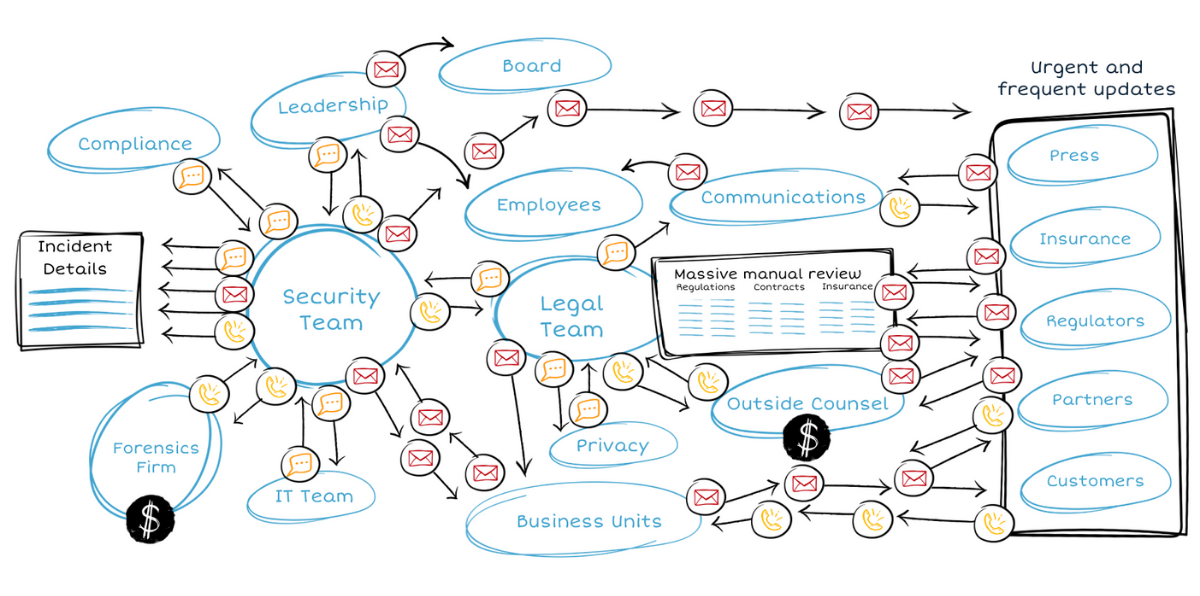
By the time an update filters up through chat threads, ticket systems, and hastily summarized emails, the context is stale. The business impact is unclear. And the window to act, control messaging, manage reputation, and minimize fallout, is already closing.
The result?
- Confusion at the top. Competing versions of the story circulate among executives.
- Slower decisions. Approvals and statements lag because leaders don’t have confidence in the data.
- Frequent standups and meetings. Limited shared real-time visibility requires constant cross-functional updates, which slow operational response.
- Frustration all around. IR teams feel unsupported; executives feel left out; everyone feels exposed.
It’s not a failure of intent. It’s a failure of connection.
Why Mobility Changes the Game
The modern executive doesn’t live in the office. They’re in meetings, on flights, at customer sites, and, ironically, often away from the very systems that keep them informed during a crisis.
That mobility is great for business growth, but terrible for incident coordination. When leaders aren’t plugged into the same real-time view as their technical teams, they can’t lead with speed or confidence.
Every minute spent “getting someone up to speed” is a minute lost in a world where every second counts. Cyber crises don’t respect time zones or flight itineraries. They unfold wherever and whenever they want — and if the leadership team can’t see and respond instantly, the whole organization is fighting uphill.
Bridging the Command Divide
What organizations need isn’t another dashboard. They need a bridge, one that connects technical precision with executive perspective.
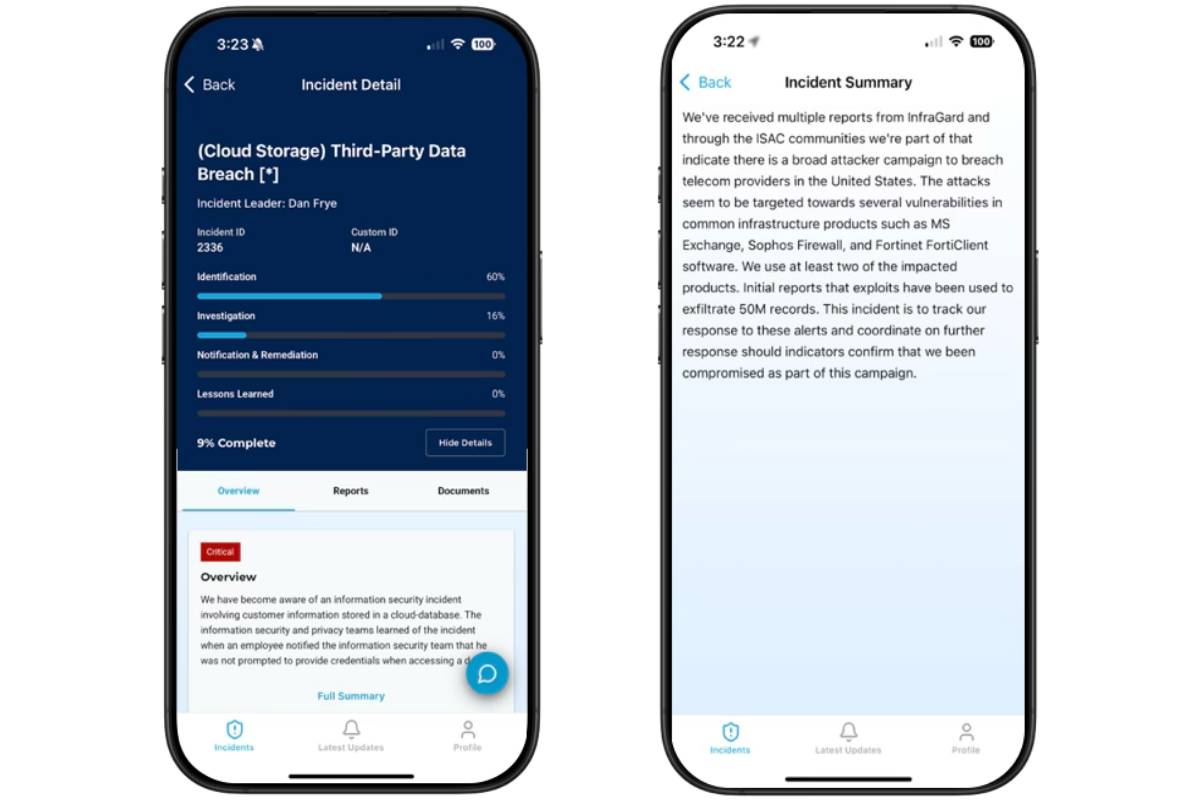
That’s why we built the BreachRx Mobile Command App — not as a shiny add-on, but as an answer to a problem we saw firsthand across countless incident simulations, tabletop exercises, and real-world breaches: executives want to lead, but they too often struggle to stay in the loop.
With Mobile Command, that gap disappears. Executives get real-time visibility, concise summaries, and direct communication with IR commanders and security leaders, all from their phones, wherever they are. It’s not about giving them every technical detail; it’s about giving them just enough to make the right decision fast.
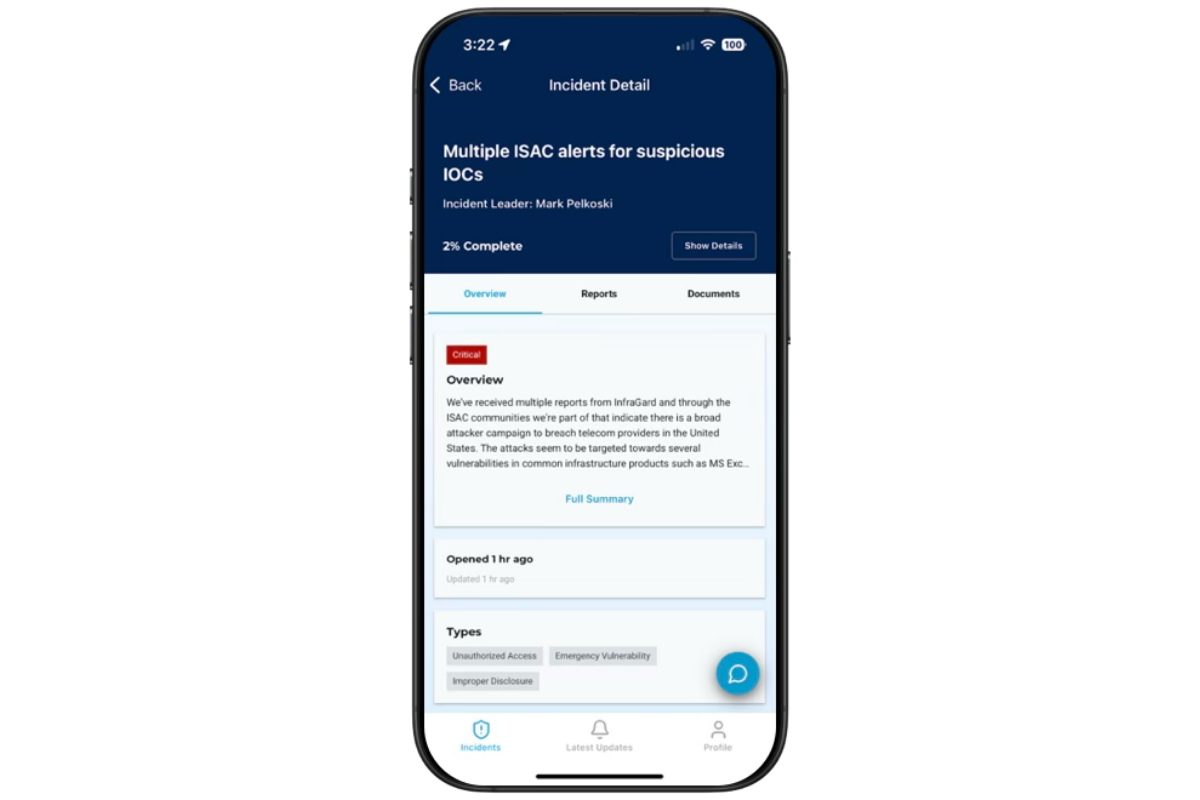
When executives and IR leaders operate in sync, in real time, on the same page, the difference is dramatic:
- Faster containment and recovery
- Stronger, more consistent messaging
- A calmer, more coordinated response
That’s not just operational efficiency. It’s leadership readiness.
Leading in the Moments That Define You
Cyber incidents are no longer just security and technology problems; they’re business-defining events. How an organization responds, and the leadership behind it, determines not only downtime or fines, but also customer trust.
The organizations that handle these moments best share one thing in common: their technical teams and executives move together.
With BreachRx Mobile Command, we’re putting that alignment in the palm of every leader’s hand — because in the moments that define your company, connection isn’t optional. It’s everything.
ABOUT THE AUTHOR
Daniel Frye
VP of Product at BreachRx
Dan Frye has more than 30 years of cybersecurity experience, including a decade as a CISO. He now leads product strategy to help organizations strengthen incident response and resilience.
Lead with confidence in every cyber crisis
Learn how BreachRx Mobile Command helps executives and IR teams stay aligned and act decisively when every second counts.