Offensive AI Is Accelerating Cyber Incidents. The Rex Platform™ Helps Enterprises Get Mythos-Ready
Executive Overview
Cyber incidents used to unfold in a sequence organizations understood: a vulnerability was discovered, attackers studied it, exploit code appeared, and teams worked through investigation, containment, recovery, and documentation.
That rhythm is disappearing.
Offensive AI, driven by the rise of Mythos-class AI tools, is accelerating the attack lifecycle from end to end. Attackers can identify vulnerable systems, research targets, generate exploit variants, craft convincing lures, automate reconnaissance, and scale campaigns with a speed traditional incident response models were never designed to match.
The Cloud Security Alliance’s AI Vulnerability Storm briefing underscores the shift: AI can accelerate both vulnerability discovery and exploitation, leaving defenders with far less time to evaluate exposure, coordinate stakeholders, and act.
The practical result: organizations can no longer plan for a single breach moving through a predictable sequence. They have to prepare for more incidents, more sophisticated incidents, and overlapping incidents that cut across systems, teams, business units, and jurisdictions at the same time.
That shift changes what AI readiness should mean. Many organizations are investing in AI to detect exposures earlier and remediate issues faster. Those capabilities matter. But detection and remediation only address part of the problem. When an incident becomes an enterprise event, the organization still has to coordinate stakeholders, assign ownership, evaluate legal and regulatory obligations, brief leadership, manage communications, preserve evidence, and document decisions in real time.
This is the gap most AI readiness strategies miss. The next advantage will not come from faster detection alone. It will come from the ability to prepare before pressure hits and coordinate enterprise-wide response when multiple incidents are active at once.
The Zero Day Clock Is Shrinking to Zero
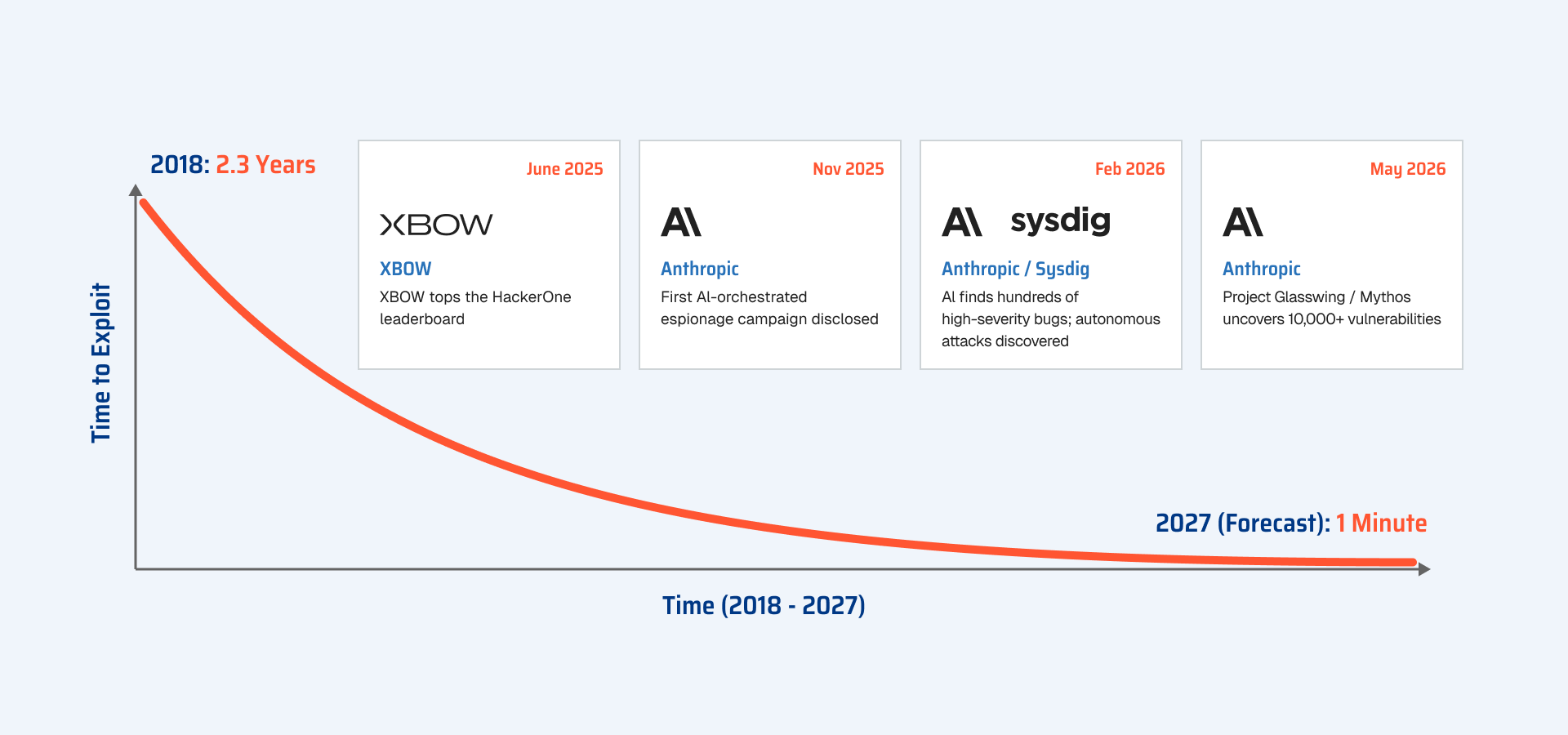
AI has lowered the skills barrier for sophisticated attacks. Capabilities that once required advanced technical expertise, specialized tooling, or coordinated teams can now be assisted, accelerated, or automated. Less experienced attackers can move faster, while skilled attackers can operate at a scale that would have been difficult to sustain manually.
That shift pushes cyber incidents beyond human scale. The pressure no longer stays inside the security team. It spreads to legal, privacy, communications, compliance, operations, executives, insurers, customers, regulators, and outside counsel.
The story does not stop with faster attacks. Faster attacks create more activity, more ambiguity, and more moments where the business has to decide what the facts mean before the facts are complete.
Speed Becomes Volume. Volume Becomes Concurrency.
The immediate impact of offensive AI is not that every attack becomes exotic. It is that familiar attacks become faster, cheaper, more targeted, and easier to repeat. Phishing becomes more personal. Reconnaissance becomes faster. Exploit development becomes more accessible. Credential abuse becomes more adaptive. Impersonation becomes more credible.
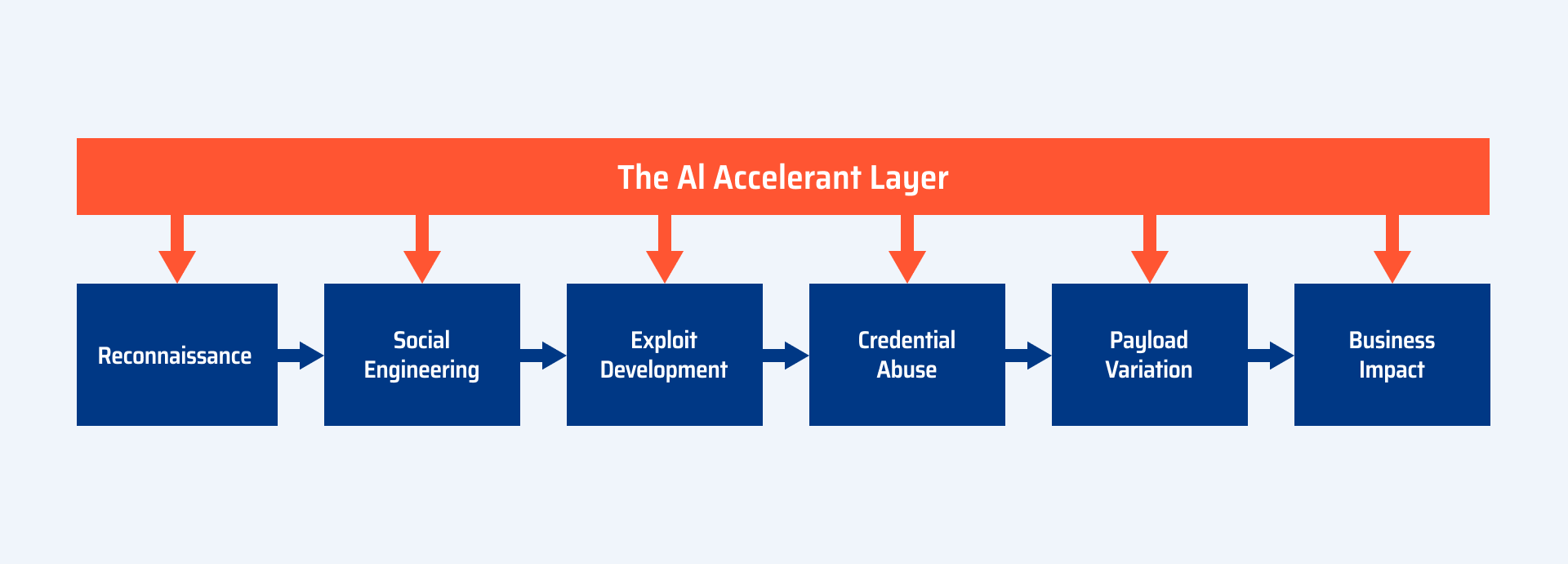
That matters because increased attack volume eventually becomes increased incident volume.
Even if security teams improve detection and prevention, more attempts create more alerts, more investigations, more ambiguous signals, and more events that require cross-functional judgment. A small percentage of a much larger attack surface still produces more real incidents for the organization to manage.
AI-accelerated attacks create three practical challenges for incident response programs:
- More volume: more lures, more exploit attempts, more variants, more suspicious signals, and more matters to triage.
- More complexity: incidents quickly pull in legal, privacy, engineering, customer success, vendors, customers, and business leaders.
- More concurrency: multiple matters move at once, each with different owners, workstreams, approval paths, regulatory considerations, and stakeholder updates.
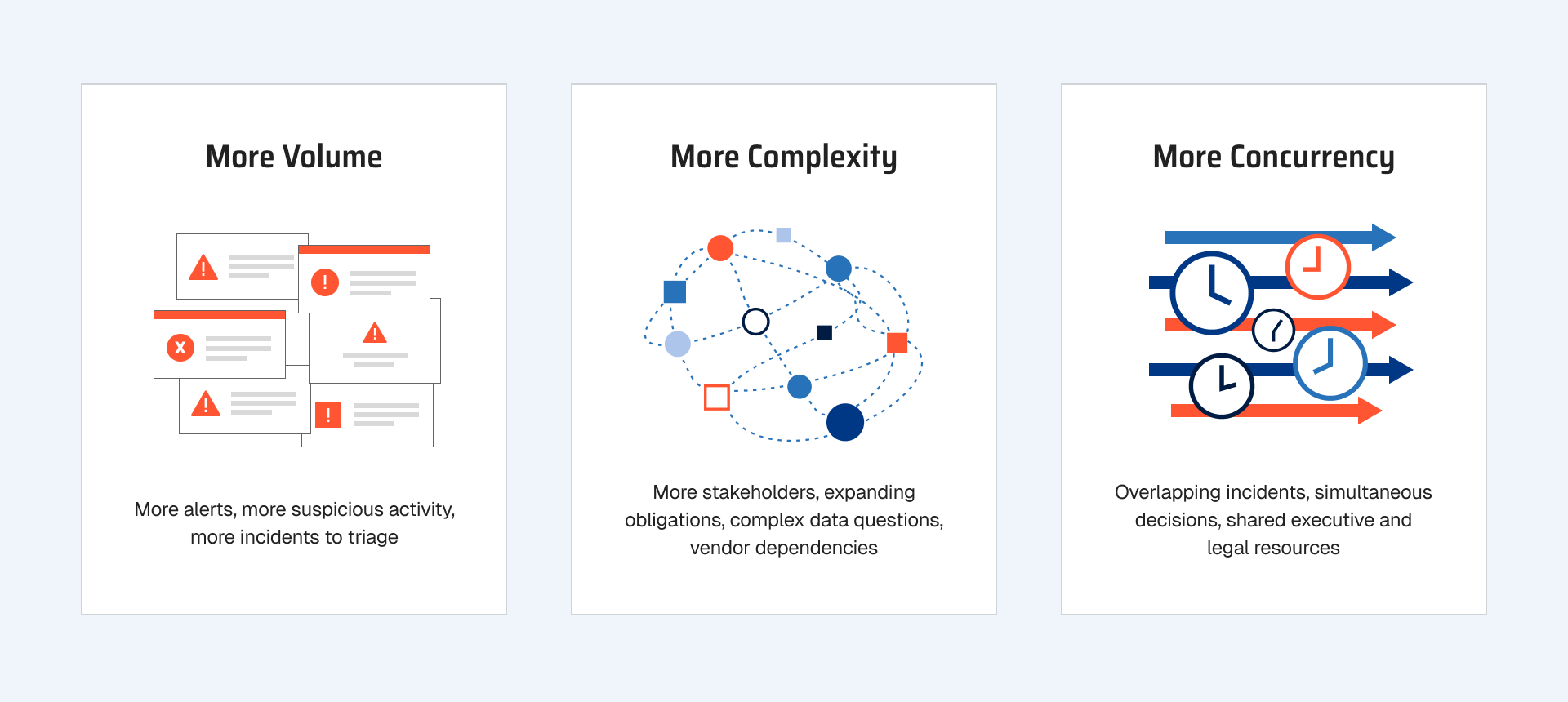
This is where the problem changes. AI is not only accelerating attacks. It is exposing enterprise response capacity as the new constraint.
Incident Response Capability Becomes the Advantage
Companies still need to detect and contain threats quickly. But as incident volume rises, the organizations that perform best will be the ones that can prepare in advance, coordinate faster, assign ownership clearly, understand obligations sooner, brief leadership consistently, preserve evidence as work happens, and make defensible decisions under pressure.
More Attack Volume Increases the Need for AI-Powered Response Capacity
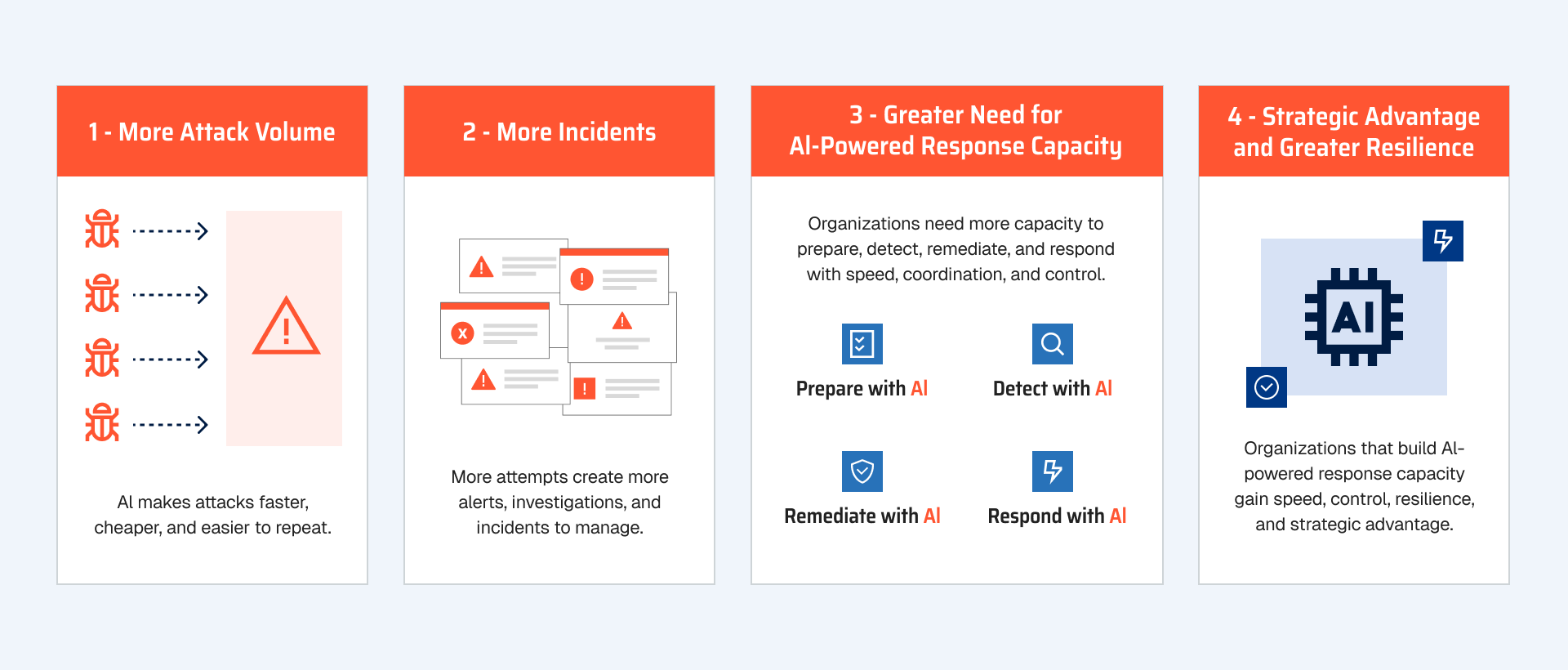
Incident response is no longer just an operational necessity – it becomes a strategic advantage. A company that can manage multiple incidents without losing control protects customers faster, reduces disruption, maintains executive confidence, and demonstrates accountability to regulators, insurers, boards, and the market.
That is what resilience looks like in the AI era. Not the absence of incidents, but the ability to absorb them, coordinate through them, learn from them, and keep the business moving.
AI-Accelerated Incidents Are a Business Continuity Problem
When incidents move faster, leaders have to make consequential decisions earlier and with less certainty.
- Should systems be taken offline?
- Should customers be notified?
- Should regulators be engaged?
- Does the board need a briefing?
- Are contractual obligations triggered?
- Should outside counsel or insurers be involved?
- What can the organization say publicly, and what evidence supports that position?
These are not purely technical questions. They require enterprise coordination and a defensible record of what was known, when it was known, who made each decision, and why the organization acted as it did. If facts, ownership, approvals, obligations, and evidence are scattered across disconnected conversations and tools, business continuity suffers.
A single technical incident instantly becomes a concurrent enterprise crisis.
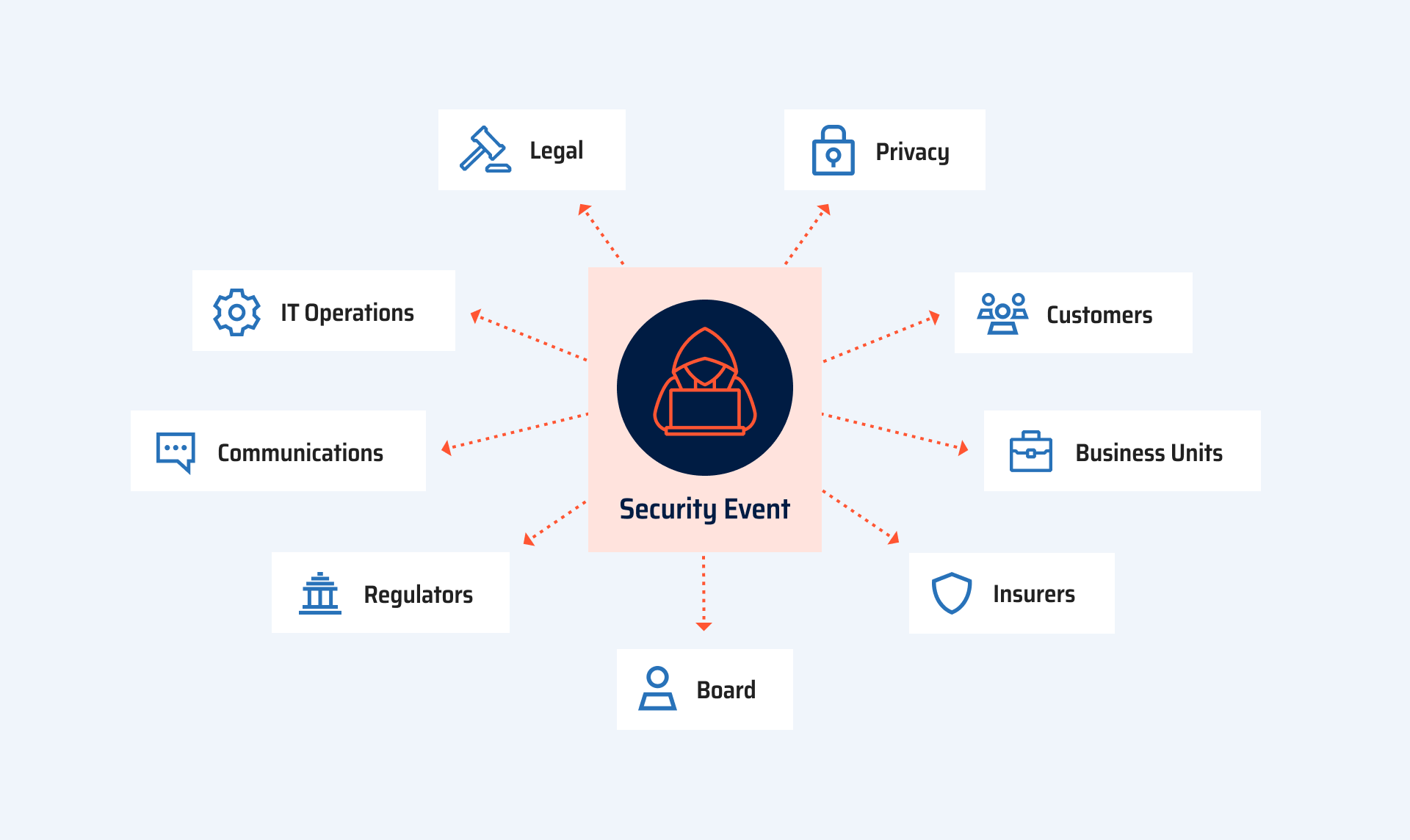
Decisions slow down. Updates become inconsistent. Continuity suffers.
The scrutiny does not end when the incident is contained. Boards, regulators, customers, insurers, and executives may later examine not only what happened, but whether the organization acted with control, clarity, and accountability under pressure.
That is why traditional incident response is still necessary, but no longer sufficient on its own.
From Incident Response to Enterprise Incident Response
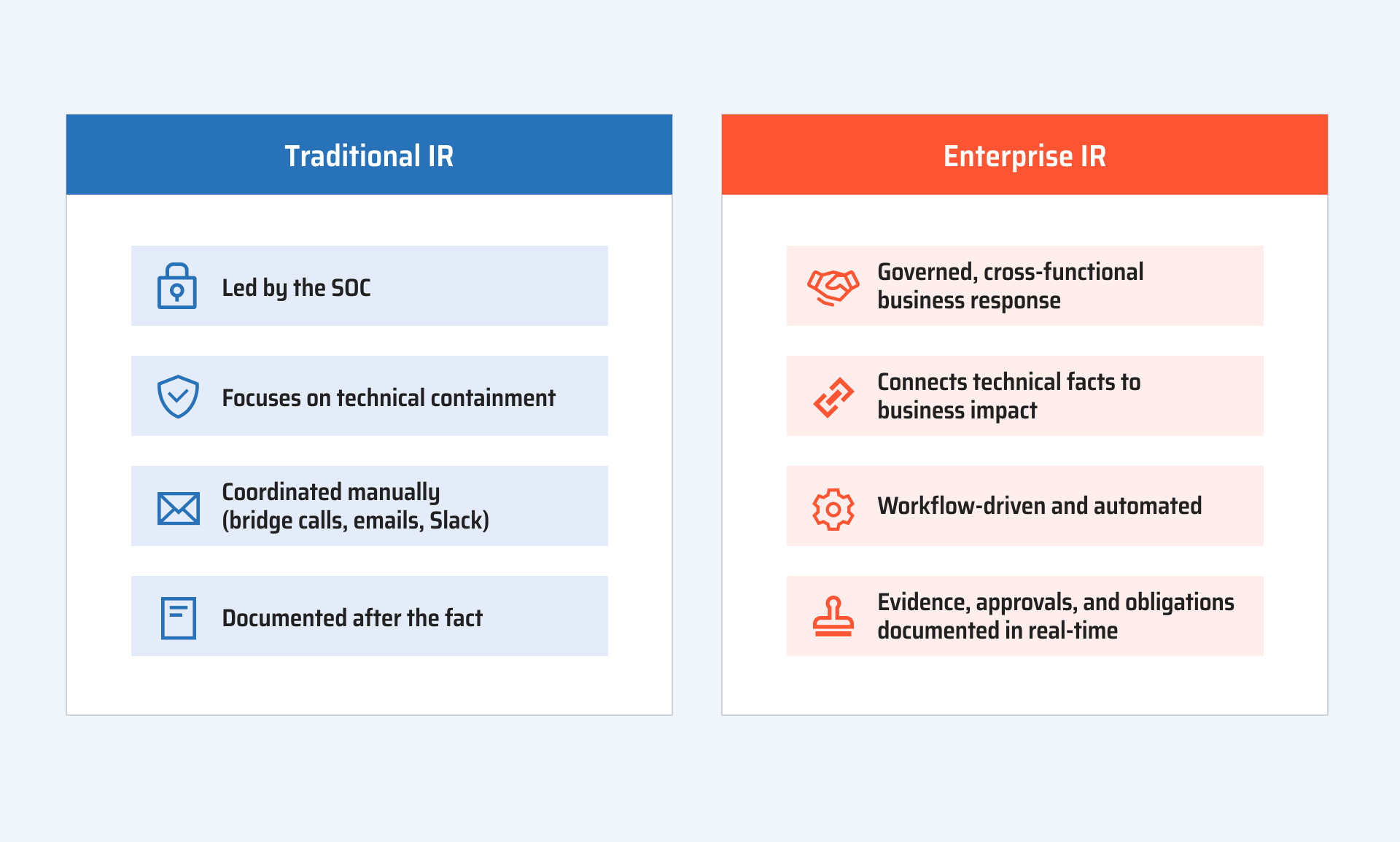
Traditional incident response remains necessary. Security and IT teams still need to detect, investigate, contain, and recover. Those capabilities are foundational, and offensive AI makes them even more important.
But AI-accelerated incidents require Enterprise Incident Response: a governed operating model that connects the technical investigation to the organization-wide business response.
Traditional incident response asks what happened technically and how the organization can contain it. Enterprise Incident Response asks what the incident means for the business, who needs to act, what obligations may apply, what decisions require approval, and what must be documented in real time so the organization can defend its response later.
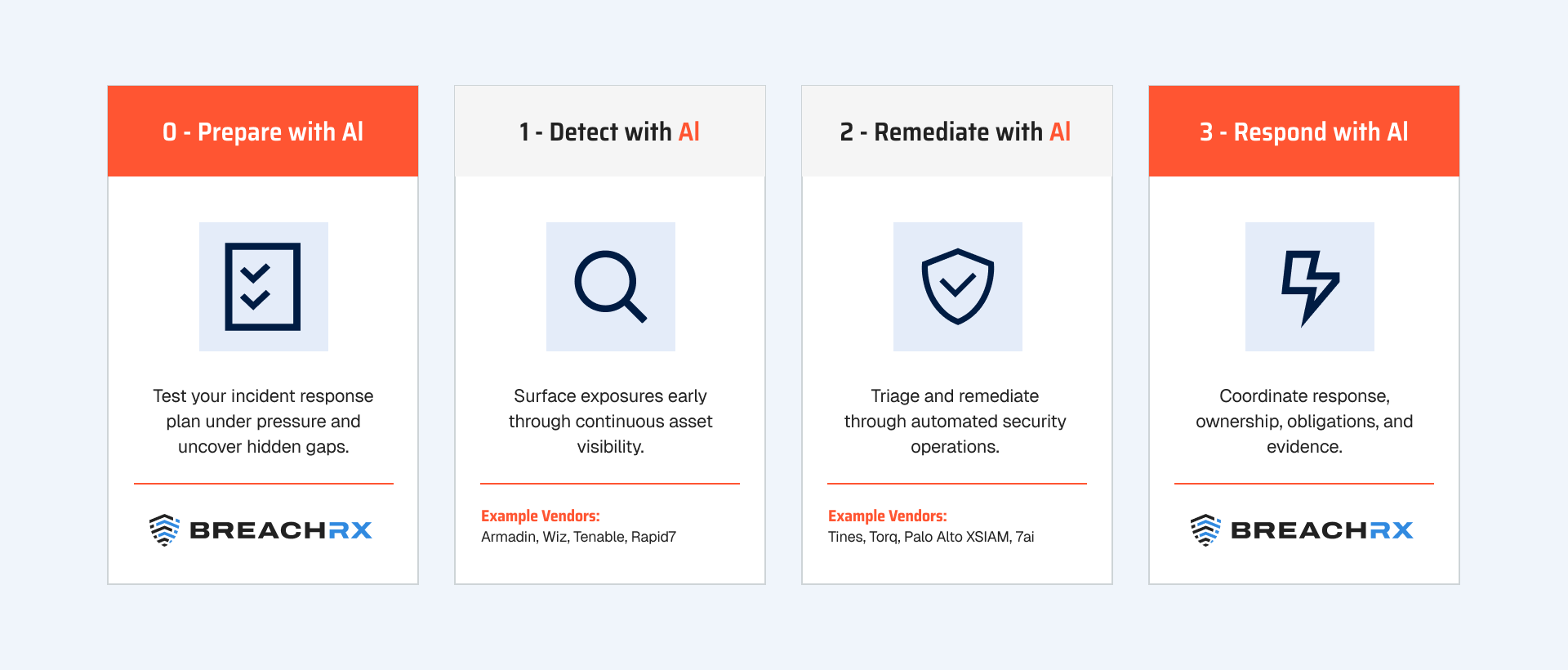
In the AI era, readiness has to span the full lifecycle: prepare with AI, detect with AI, remediate with AI, and respond with AI. Most investment is still concentrated in the middle. The next gap to close is readiness before the incident and coordinated enterprise response during one.
Rex Is the Agentic AI Incident Command Center for Enterprise Response
The Rex Platform helps organizations get Mythos-Ready by turning Enterprise Incident Response into a structured, governed operating process. It is not another alert console. It is the coordination layer for workflows, decisions, obligations, ownership, approvals, evidence, and stakeholder alignment.
Rex gives teams one controlled environment for managing incident work across security, IT, legal, privacy, communications, compliance, executives, outside counsel, insurers, and business stakeholders. That environment is designed to remain available when primary systems are unavailable, compromised, or under investigation.
Teams can see incident status, ownership, deadlines, stakeholder workflows, regulatory obligations, evidence, and out-of-band collaboration as events unfold. The goal is not to replace human judgment. It is to make sure the right people have the right context, the right work is moving, and the response record is preserved while decisions are being made.
Maestro and Specialized Agents
Maestro is the AI coordination agent that sits at the center of Rex. It preserves incident context, interprets changing conditions, and coordinates specialized agents across the response lifecycle so teams are not dependent on static workflows or generic copilots.
- Incident Commander Agent evaluates severity, affected assets, and recommended next steps.
- Incident Operator Agent advances procedures, coordinates execution, and keeps playbooks moving.
- Cyber RegScout®, the regulatory agent, connects incident attributes to disclosure obligations and jurisdictional requirements.
- Reporting Agent produces executive summaries, situation reports, regulatory updates, and response documentation.
- Document Agent reviews contracts, policies, procedures, vendor agreements, and related materials to identify relevant obligations and guidance.
- Exercise Agent supports simulations, tabletop facilitation, and ongoing readiness.
Together, these agents form an operational layer that helps teams stay aligned as incidents evolve, expand, and overlap. AI handles procedural coordination so humans can focus on judgment, strategy, approvals, risk acceptance, communications, and leadership accountability.
Prepare, Practice, and Respond at Enterprise Speed
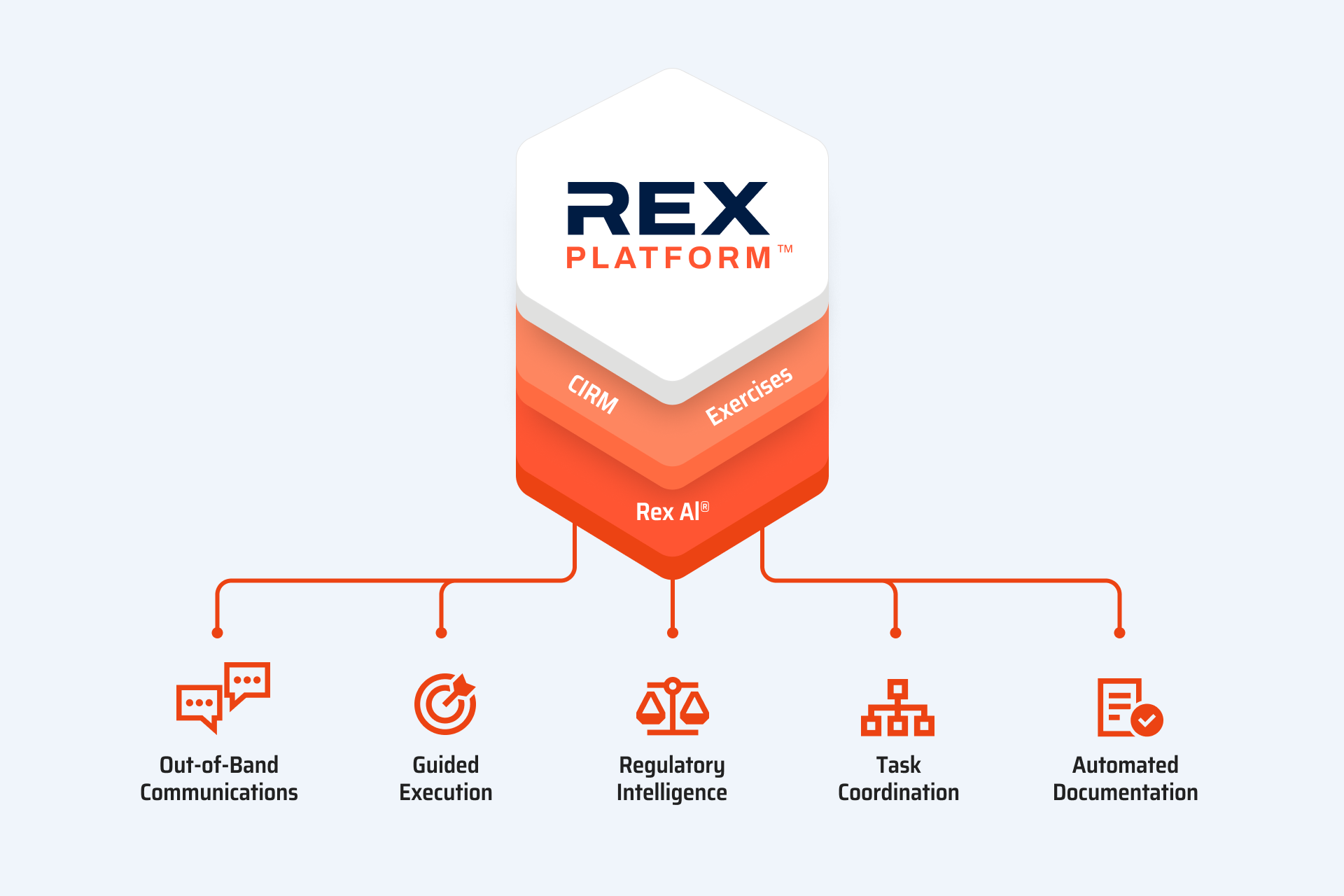
The Rex Platform is broader than live response. It supports the full Enterprise Incident Response lifecycle: prepare, practice, and respond.
- Prepare: structure readiness into the enterprise by defining roles, procedures, obligations, escalation paths, and decision authority before pressure hits.
- Practice: turn tabletop exercises into repeatable enterprise muscle memory so teams can identify gaps, improve workflows, and train the way they will respond.
- Respond: coordinate people, obligations, communications, tasks, evidence, and executive decisions in one governed operating environment during active incidents.
Preparing for Continuous, Concurrent, and AI-Native Incidents
Getting Mythos-Ready also means preparing for AI-native incidents. As organizations adopt AI agents, copilots, and AI-enabled enterprise applications, incidents may increasingly stem from AI behavior itself, including unintended data exposure, excessive permissions, unsafe outputs, model manipulation, or compliance failures.
Those events create many of the same response demands as cyber incidents: compressed timelines, regulatory analysis, executive scrutiny, and coordinated decisions across security, legal, privacy, compliance, communications, and business leadership. Rex gives teams one operating model for both AI-powered attacks and AI-driven incidents.
Chaos Is Optional
The next phase of cyber risk will not be defined only by more sophisticated attacks. It will be defined by whether organizations can manage the enterprise consequences of those attacks at AI speed.
Traditional incident response is still essential, but it is no longer sufficient on its own. AI-accelerated incidents require a broader operating model that coordinates technical facts, business impact, legal obligations, executive judgment, communications, evidence, and accountability in real time.
Get Mythos-Ready. Offensive AI accelerates attacks. Rex accelerates enterprise response.
Incidents are inevitable. Chaos is optional. The organizations that will respond best in the AI era will not simply be the ones that detect fastest. They will be the ones that can coordinate, decide, document, and move together with confidence when the pressure is highest.
Is Your Incident Response Operating Model Ready for the AI Era?
Learn why AI-accelerated exploits demand a new approach to enterprise incident response.