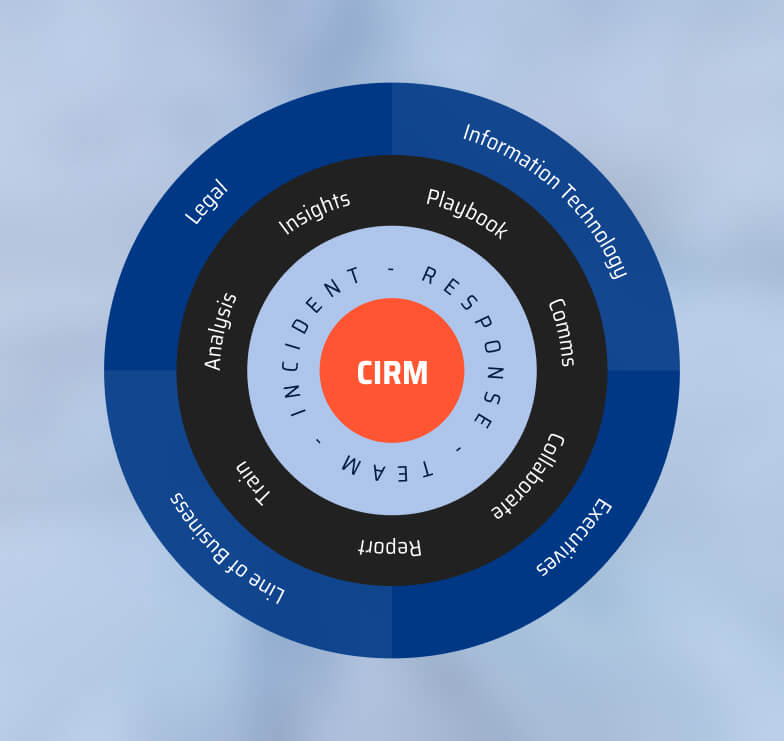
What is CIRM?

Cyber Incidents Require Enterprise-Wide Responses

Incident response used to be a technical security function: detect the attack, isolate systems, and restore operations. Today, it’s more complex, requiring coordination across security, legal, privacy, communications, leadership, and external partners while the situation is still evolving. In this environment, how an organization responds can matter as much as the incident itself.

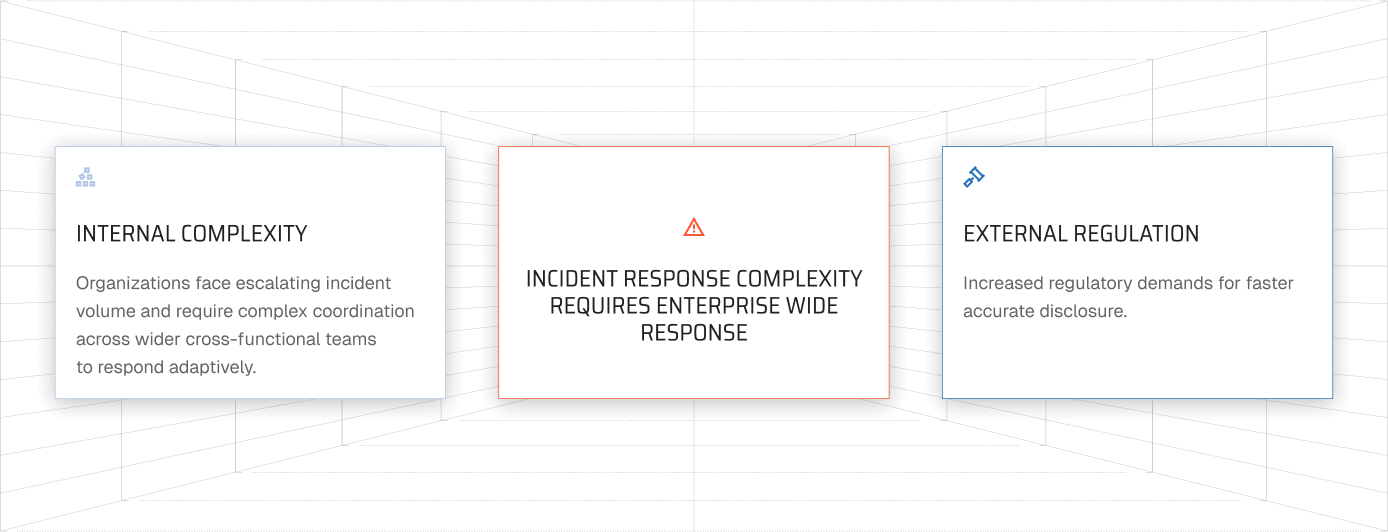
Rising Complexity Demands a Coordinated Response

Cyber Incidents Have Changed

Cyber incidents are no longer isolated technical events. They have become continuous enterprise disruptions
that require coordinated response across the organization.

Defining Cyber Incident Response Management

Companies often assign an Incident Commander to own the end-to-end response to cyber incidents. They align teams, drive decisions, maintain situational awareness, and ensure the organization responds quickly and correctly as the situation evolves. But most organizations do not equip them with the capabilities to do this job effectively.

Where Traditional Incident Response Breaks Down

No dedicated tools

Email and chat threads become the primary tools to coordinate teams and share updates

Static playbooks

Spreadsheets or tickets created from static playbooks that cannot adapt as an incident evolves

Manual documentation

Meeting notes must be manually aggregated to create a single source of truth

Lack of visibility

Leaders lack clear visibility into who is responsible for tasks, what actions have been taken, and when they occurred

CIRM gives Incident Commanders the structure required to coordinate and manage modern cyber response.

This makes it difficult to maintain visibility, assign ownership, enforce accountability, or document decisions during a fast-moving incident.

In practice, CIRM is the set of capabilities that empowers an effective Incident Commander. At its core, CIRM transforms incident response from an ad hoc coordination effort into a structured, repeatable enterprise-wide process. It gives the Incident Commander the system required to own and run the response.

Why Traditional Incident Response Is No Longer Enough

CIRM solutions manage incidents as a coordinated operational process rather than a fragmented series of technical tasks

Basic Attacks

1990s

ITSM
Built for IT Teams

Detect Attacks Better

2000’s

ITSM
Built for Detectopm

Contain Attacks Once Detected

2010’s

EDR/XDR
Built for Containment

Enforce Technical Fixes

Late 2010’s

SOAR
Built for Efficiency

Automate Tedious Tasks

2020’s

AI SOC
Built for Triage

The IR Gap

The IR Gap Tools FAIL to answer

  • Who handles the business needs?
  • Who owns the incident?
  • What are disclosure requirements?
  • How are decisions tracked as incidents evolve?
  • How can the response be adapted with new facts?
Constant, Bigger Attacks

2026

CIRM
Built to be the incident command center.
Built for ownership decisions, defensibility.

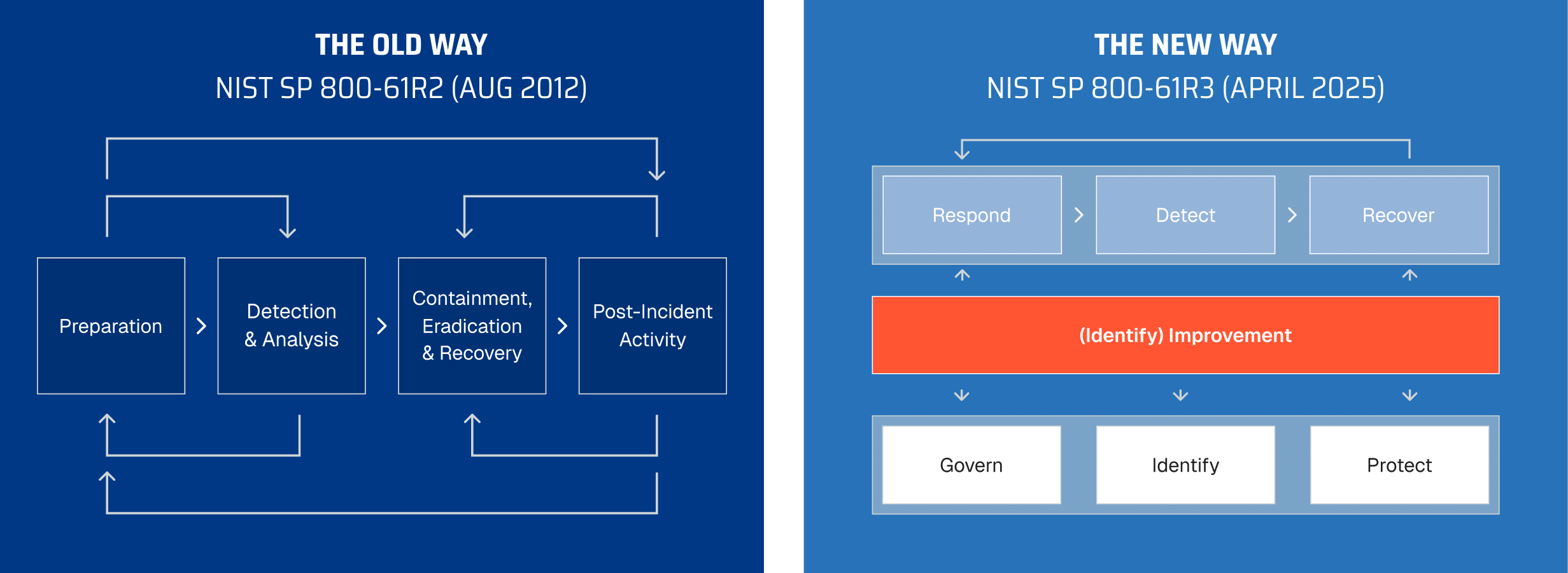
NIST 800-61r3 and other standards extend incident response beyond technical containment

  • Prioritize programmatic preparation over ad-hoc reaction.
  • Require clear roles, responsibilities, and decision rights.
  • Integrate cyber risk into enterprise risk management.

Gartner officially recognizes the need for Cyber Incident Response Management (CIRM)

What CIRM Solutions Do

CIRM solutions manage incidents as a coordinated operational process rather than a fragmented series of technical tasks.

Coordination

Role-based workflows that align security, legal, IT, and leadership teams.

Adaptive Playbooks

Dynamic guides that direct response based on incident type and severity.

Evidence Capture

Comprehensive records that satisfy regulations and support operational improvements.

Integrated Collaboration

Secure environments designed for coordination 
across internal and external teams.

Post-incident Reporting

Comprehensive records that satisfy regulatory requirements and drive operational improvements.

CIRM is the Future of Cyber Incident Response

Cyber incidents will continue to grow in complexity, regulatory scrutiny, and organizational impact. The BreachRx CIRM solution helps companies respond with clarity, coordination, and discipline across the entire cyber incident lifecycle.